December 23, 2025
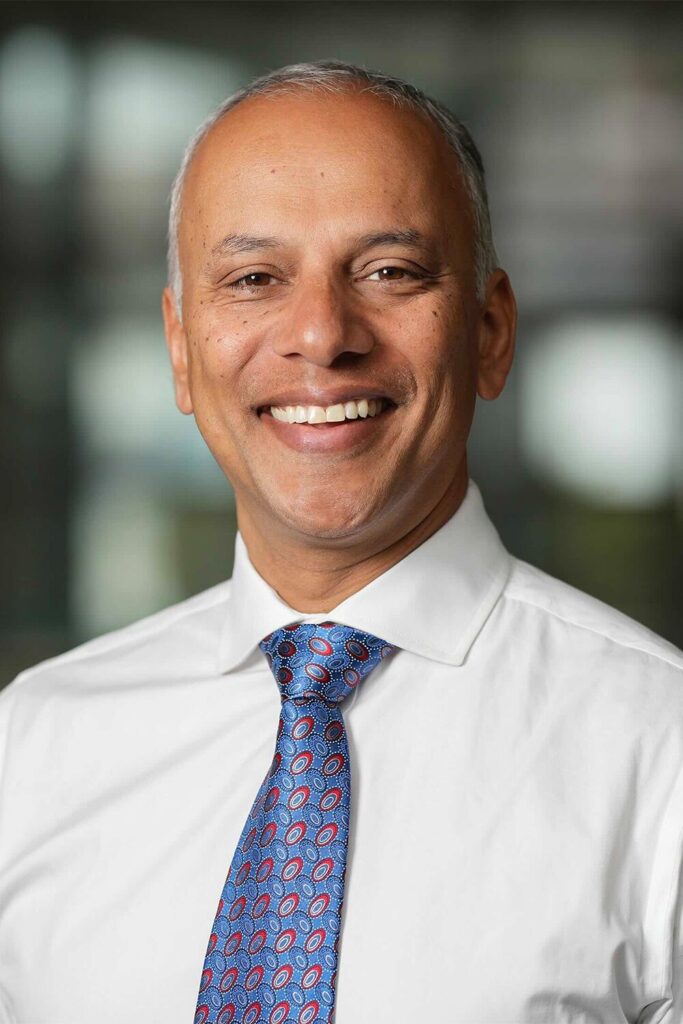
Chandy C. John, MD, MS, FPIDS, is Ryan White Professor of Pediatrics and Professor of Medicine, Microbiology, Immunology and Epidemiology at Indiana University and the Riley Hospital for Children, where he is also Indiana University Distinguished Professor and Co-Division Chief of Pediatric Infectious Diseases and Global Health. He received his medical degree at the University of Michigan, where he also completed his residency. His pediatric infectious diseases fellowship was completed at Case Western Reserve University and Rainbow Babies and Children’s Hospital.
Dr. John received the Young Investigator Award in 2004. He delivered the Caroline B. Hall Clinical and Translational Science Lecture at IDWeek 2023. Previously, Dr. John served PIDS on both the Global Health Committee and the Nominations and Awards Committee. He was elected to the Board of Directors this past October.
Why pediatric ID? I have been interested in global health since I was a medical student. Our infectious diseases lecturer, Dr. Carol Kauffman, made the topic incredibly interesting, and made me think that there is where I’d like to focus my future work. When I was in Nigeria doing an AMSA International Health Fellowship as a resident, I saw many, many children with malaria, and saw the cost in terms of illness and death, and decided that this would be my research focus. A pediatric infectious diseases fellowship was the logical next step for me to pursue my clinical and research interests.
Where have you taken your ID focus? My primary focus has always been my research, which has two main areas of focus: one, why children develop severe malaria and its complications, including acute and post-discharge death, post-discharge readmissions and long-term cognitive impairment; and two, how to prevent infections, including malaria, in children with sickle cell disease. That takes up the biggest portion of my time.
Certainly in the current challenging times, another major area of work has been continued advocacy for vaccines as one of the best ways to prevent illness in children. At an even higher level, defending the importance of data and expertise in making public health policy. In addition to PIDS, I’m a member of the American Academy of Pediatrics Committee on Infectious Diseases, and we’ve been very busy on this front.
What is a recent development in pediatric ID that you are working on? Our research group published findings earlier this year in Nature Medicine showing that elevated uric acid levels are correlated with in-hospital and post-discharge mortality and with cognitive impairment in survivors. We also showed through mediation and pathway analysis that there were mechanisms by which uric acid might lead to these complications.
It was a very exciting new finding, suggesting that lowering uric acid levels might be a way to reduce mortality and long-term complications in severe malaria, and it happened because we have amazing collaborators at Makerere University and Global Health Uganda in Uganda, and at Indiana University, that could provide the combined expertise needed for a complex study like this.
What do you enjoy most about being a PIDS member? What keeps you renewing your membership? The work we do in pediatric infectious diseases has global significance, as was made clear during the COVID-19 pandemic. That expertise has never been more important than right now, when decisions are being made on public health policy that are not based in evidence and expertise. PIDS is the organization that brings everyone in pediatric ID together and speaks out on critical issues that relate to our field in a time when we need that more than ever.
PIDS also is the key organization that builds and fosters the next generation of peds ID clinicians, researchers and educators. I would feel lost professionally without PIDS. It anchors our field, and that’s why I am so honored to be on the PIDS Board of Directors and why I renew my PIDS membership every year.
Improving the health of children worldwide through philanthropic support of scientific and educational programs.